
Ampeleia: The Tuscan Winery Elisabetta Foradori Helped Start, and the Litre of Red Coming to Vietnam

If you pour Foradori's wines, you already know half of this story. Elisabetta Foradori made her name in Trentino with Teroldego, biodynamic farming and a habit of doing things her own way. Fewer people know that she also helped start a winery a long day's drive south, in a corner of Tuscany most wine lovers drive straight past. It is called Ampeleia, and its everyday red, Unlitro, is coming to Vietnam with us.
Three friends and a lunch in the mountains
Ampeleia began, as good ideas often do, at a lunch table. In 2000, Elisabetta Foradori sat down with two friends, Giovanni Podini and Thomas Widmann, at a mountain refuge in the Alps more than 2,000 metres up. By the end of the meal the three of them had agreed they wanted to make wine somewhere special. Two years later Foradori and Podini found the place: a run of wooded hills around the village of Roccatederighi, in the Alta Maremma.
The name comes from ampelos, the Greek word for vine. Today the Podini family leads the estate, and Foradori still sits on its board. You will see some American shops sell Unlitro as "a Foradori wine". That is a little out of date, but you can see why the name stuck.

A 22-year-old in the mining hills
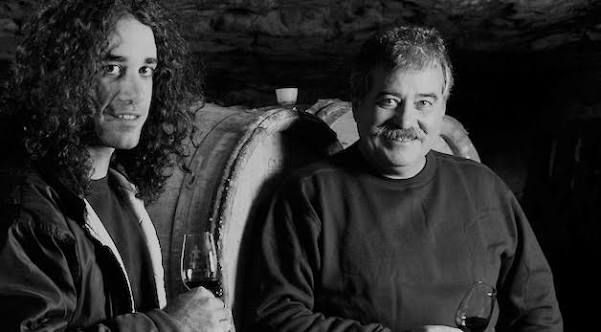
In 2002 the founders handed the vineyards and the cellar to Marco Tait. He was 22. Tait grew up in Trentino, where his father worked as Foradori's agronomist, and he has made every Ampeleia vintage since. At 22 most of us were still working out what to drink. The next year he was planting Grenache.

The hills are the Colline Metallifere, the "metal-bearing hills", mined since Etruscan times and now a UNESCO Global Geopark. They were never farmed hard, and few people live there even today. Ampeleia owns 120 hectares, and only 35 of them are vines. The rest is oak wood, olive trees, wheat, a vegetable garden and pasture. The vineyards climb from about 200 metres, close enough to feel the sea air, up to 600 metres among the oaks.

Tait matches each grape to its height. Cabernet Franc, the estate's pride, grows highest, at La Rocca, on galestro and clay. Lower down, on clay and silt full of marine fossils, he grows the Mediterranean grapes. The most important is Alicante Nero, which is what Maremma calls Grenache. It grew on this coast for centuries until farmers swapped it for varieties that gave more fruit, and Ampeleia began replanting it in 2003 to bring it home.
The estate began converting to organic farming in 2009 and has farmed biodynamically since 2013. It runs as a mixed farm. Five cows graze freely and supply the manure for the biodynamic preparations, which are all made on the estate, and about ten beehives sit among the vines. In the cellar there is no oak at all. Every wine ferments and ages in concrete.

Unlitro, a one-litre bottle for the table
Anyone who has eaten in an old-school Italian restaurant knows the fiasco, the round straw-wrapped flask of Chianti that sat on every table and later ended up holding a candle. It was everyday wine for sharing, and then, little by little, time forgot it. Unlitro is Ampeleia's answer to it, made only in a one-litre bottle since the 2011 vintage. Marco Tait has said he wanted to give everyday wine its value back, and the estate sells it with one simple instruction: share it in good company.

The fruit comes from the youngest vines, nearest the sea, in the Cannucceto vineyard. It is a Grenache-led blend with Sangiovese, Mourvèdre and a little Alicante Bouschet, and the proportions move a little each vintage. The grapes spend only two to three days on their skins, then six months in concrete. It comes out at 12% alcohol, with red cherry, raspberry, pomegranate, wild herbs and a pinch of pepper, soft tannins and plenty of freshness. Critics keep scoring it above 90, which is unusual for a wine meant for Tuesday lunch, and in October 2026 the Slow Wine guide named it one of its Top Wines.
Two practical notes from us. Unlitro can be a little shy when you first open it, so give it a few minutes in the glass or a swirl in a carafe. And in Vietnam, serve it cool. Fifteen to twenty minutes in an ice bucket brings it to around 12–14°C, which is where the fruit shows best. It is very happy next to anything grilled: nem nướng, cơm tấm with sườn nướng, chicken off the charcoal, or a pizza if that is where the evening goes.
Why we like them
Foradori is already in our catalog, so Ampeleia felt less like a new name than a friend of a friend. Then we tasted Unlitro, and it went down a little too quickly for a wine we were supposed to be assessing.
For the hotels, resorts and restaurants we work with, it also solves a few real problems. It is light enough to pour by the pool at 32°C and good enough that no sommelier needs to apologise for it. A litre gives six or seven glasses where a standard bottle gives five. And it comes from an estate whose Cabernet Francs sit on fine-dining lists, so one producer can cover both the pool bar and the dining room.
Unlitro arrives in Vietnam with Glouglou this November. If you would like to taste it with your team before it lands, or want it on your by-the-glass list, write to us and we will arrange a bottle. We deliver within 24 hours from our warehouses in Ho Chi Minh City, Hanoi, Da Nang and Nha Trang.


Comments